


 Bullfighters
Antonio Chenel “Antoñete”: the story of the bullfighter who made Las Ventas his home
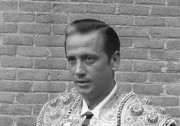 03/11/2026
Antonio Chenel "Antoñete": The story of the bullfighter who made Las Ventas his home
Bullfighting biography | History of bullfighting in Madrid | Las Ventas Bullring
To speak of Antonio Chenel "Antoñete" is to speak of the history of bullfighting in Madrid. His name remains forever linked to the Las Ventas bullring—the setting for some of the most memorable afternoons of his career and the place where his calling as a bullfighter was born.
Antoñete was not merely a bullfighter from Madrid; he was one of the great artistic figures of 20th-century bullfighting—a man with a unique personality who defined his own approach to the art of the bullfight through elegance, naturalness, composure, and purity.
His early years: A boy who grew up among bulls
Antonio Chenel Albadalejo was born in Madrid on June 24, 1932, into a humble family.
His childhood was closely tied to the Monumental de Las Ventas. When he was about seven years old, he moved into the bullring with his family. His father worked as a *monosabio* (an assistant in the bullring), and his brother-in-law, Paco Parejo, was the *mayoral* (overseer of the bulls) at the Madrid arena.
These circumstances allowed him to learn the secrets of the profession from a very young age. He grew up among corrals, horses, bullfighters, and their *cuadrillas* (entourages), observing the great stars of the era up close.
The bullring that would shape his life eventually became his second home.
His beginnings as a bullfighter
In 1949, he wore the *traje de luces* (bullfighter’s suit of lights) for the first time. Gradually, he began to carve out a path for himself in the world of bullfighting, participating in various events and *novilladas* (bullfights featuring younger bulls and up-and-coming bullfighters).
On February 18, 1951, he made his debut with *picadores* (mounted lancers) in Barcelona. Subsequently, on June 5, 1952, he made his debut as a *novillero* (novice bullfighter) at Las Ventas—the bullring he had known since he was a child.
As his professional career progressed, the time arrived for him to become a *matador de toros* (fully-fledged bullfighter).
On March 8, 1953, he took his *alternativa* (the ceremony in which a novice becomes a *matador*) in Castellón de la Plana, with Julio Aparicio acting as his sponsor (*padrino*) and Pedro Martínez "Pedrés" as a witness.
On May 13 of that same year, he confirmed his *alternativa* in Madrid, with Rafael Ortega as his sponsor and Julio Aparicio as a witness.
1966: The historic *faena* (performance) with the bull "Atrevido"
There is one date that holds a place of honor in the history of Antoñete: May 15, 1966—the feast day of San Isidro.
That afternoon, at the Las Ventas bullring, he faced "Atrevido," a white bull from the Osborne ranch.
Against this animal, he delivered a *faena* that remained etched in the memories of several generations of *aficionados* (bullfighting fans). His *naturales* (passes made with the *muleta* held in the left hand without the aid of the sword), his positioning, his *temple* (rhythm and composure), and the way he guided the bull with the *muleta* constituted a true masterclass in the art of bullfighting.
Antoñete succeeded in deeply moving the Madrid audience with a style of bullfighting rooted in profoundness and naturalness. That performance firmly established him as a legendary figure at Las Ventas.
The *faena* with "Atrevido" is considered one of the greatest chapters in the history of bullfighting.
A bullfighter with a unique personality
Antoñete possessed a very distinct way of interpreting bullfighting. He had no need for exaggerated gestures or unnecessary movements.
His approach was built upon:
- The purity of his *naturales*.
- His positioning and his mastery of the terrain (*terrenos*) within the ring.
- His *temple* (rhythm and composure) and elegance.
- His absolute stillness in front of the bull. - The personality and naturalness of every *muletazo* (bullfighting pass).
His presence conveyed a classic, old-school style of bullfighting, yet it also possessed a modern quality that made him a benchmark for countless fans and professionals alike.
Retirements, comebacks, and a second youth
Antoñete’s career was marked by injuries, physical ailments, and various periods spent away from the bullring.
In 1975, he announced his retirement, but his passion for bullfighting proved too strong, and he later returned to the ring.
His comeback in the 1980s was particularly significant. On June 7, 1985, he delivered another memorable performance at Las Ventas, featuring an exceptional *faena* (a series of passes) with the bull "Cantinero," from the Garzón ranch.
He demonstrated that his artistic ability remained intact and that he still had much to offer the Madrid audience.
RTVE.es+1
Antoñete retired and returned to the ring on several other occasions. His final professional period lasted until 2001.
His final years and passing
In his later years, Antoñete remained connected to the world of bullfighting, serving as a commentator and sharing his expertise with fans.
On October 22, 2011, he passed away at the age of 79 at the Puerta de Hierro Hospital in Majadahonda, following a serious respiratory complication.
His death sent a profound shockwave through the bullfighting world. Las Ventas—the bullring that had been his home throughout his life—hosted a *capilla ardiente* (lying-in-state) so that fans could pay their final respects.
The Community of Madrid and the bullfighting community have kept his memory alive. In the *patio de arrastre* (the area where bulls are removed from the ring) at Las Ventas, there is a mosaic dedicated to the *maestro*, bearing an inscription that perfectly encapsulates his relationship with the arena:
«
Back